Home What Is Cognitive Computing? Definition, Examples, and Use Cases
What Is Cognitive Computing? Definition, Examples, and Use Cases
Learn what cognitive computing is, how it works, and where it applies. Explore real use cases, key benefits, and how it differs from traditional AI.
What Is Cognitive Computing?
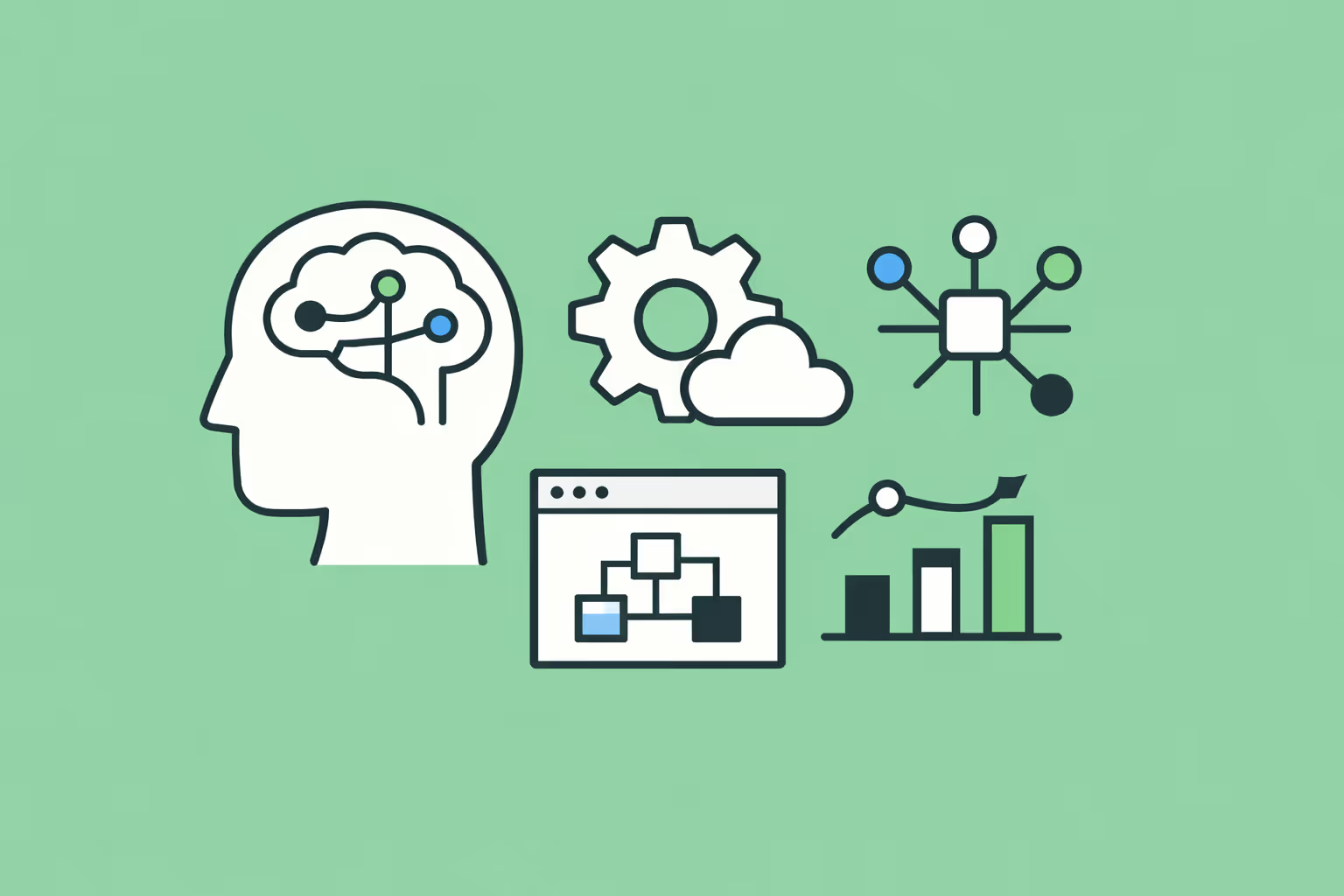
Cognitive computing refers to technology systems that simulate human thought processes to solve complex problems. These systems combine machine learning, natural language processing, pattern recognition, and data mining to interpret unstructured data, generate hypotheses, and deliver context-aware recommendations.
Unlike traditional computing, which follows pre-programmed rules and produces deterministic outputs, cognitive systems operate probabilistically. They weigh evidence, assess confidence levels, and refine their models based on new information. The goal is not to replace human judgment but to augment it by processing volumes of data that no individual or team could analyze manually.
The concept gained visibility when IBM introduced Watson, a system capable of parsing natural language questions and reasoning across massive knowledge bases. Since then, cognitive computing has expanded into healthcare diagnostics, financial risk modeling, customer service automation, and education, among other fields.
What makes cognitive computing distinct is its orientation toward collaboration with humans. These systems are designed to present options and evidence, not to make autonomous decisions. The human operator retains authority over the final action.
How Cognitive Computing Works
Cognitive systems rely on several interconnected technologies to interpret, reason, and learn from data. No single algorithm defines the field. Instead, cognitive computing integrates multiple disciplines into a unified processing pipeline.
Data ingestion and preparation. Cognitive platforms ingest structured and unstructured data from diverse sources: text documents, images, sensor feeds, audio recordings, and transactional databases. The system normalizes this data into formats suitable for analysis, often using entity extraction and metadata tagging to create searchable knowledge graphs.
Natural language processing (NLP). NLP enables cognitive systems to understand human language, including ambiguity, context, and intent. This capability allows the system to process queries phrased in conversational language rather than rigid syntax. NLP also supports sentiment analysis, summarization, and semantic search across large document sets.
Machine learning and pattern recognition. Cognitive platforms use supervised, unsupervised, and reinforcement learning to identify patterns in data. These models improve over time as they process more examples, adjusting their internal weights to improve accuracy. Pattern recognition is particularly important in anomaly detection, trend forecasting, and classification tasks.
Reasoning and hypothesis generation. Once data is ingested and patterns are identified, the system generates hypotheses ranked by confidence score. This is where cognitive computing diverges most from conventional analytics. Rather than returning a single answer, cognitive systems present multiple possibilities along with the evidence supporting each one.
Feedback loops. Human feedback is critical. When a user accepts, rejects, or modifies a recommendation, that signal is fed back into the model. Over time, this loop refines the system's accuracy and relevance for its specific operating context.
The result is a system that learns from interaction, adapts to new data, and improves with use. It does not require explicit reprogramming for every new scenario.
| Component | Function | Example |
|---|---|---|
| Natural language processing | Interprets and generates human language from unstructured text. | Analyzing medical records or customer feedback. |
| Machine learning | Identifies patterns and improves accuracy with more data. | Refining product recommendations over time. |
| Pattern recognition | Detects meaningful structures in images, text, or data streams. | Flagging anomalies in financial transactions. |
| Data mining | Extracts insights from large, complex datasets. | Discovering drug interaction risks across millions of records. |
| Probabilistic reasoning | Weighs evidence and assigns confidence levels to conclusions. | Ranking potential diagnoses by likelihood. |
Cognitive Computing vs. Artificial Intelligence
Cognitive computing and artificial intelligence are related but not identical. The confusion between them is common because cognitive systems use AI techniques as building blocks. The distinction lies in design philosophy, scope, and intended use.
Artificial intelligence is a broad field encompassing any system that performs tasks typically requiring human intelligence. AI includes autonomous agents, robotics, computer vision, and generative models. Many AI systems are designed to operate independently, making decisions and executing actions without human involvement.
Cognitive computing is a subset of AI with a narrower focus: augmenting human decision-making. Cognitive systems are explicitly designed to work alongside people, presenting evidence and recommendations rather than acting autonomously. The emphasis is on collaboration, not replacement.
Key differences include:
- Autonomy. AI systems can operate independently. Cognitive systems are built for human-in-the-loop workflows.
- Output type. AI often delivers definitive outputs (classifications, predictions, generated content). Cognitive systems deliver ranked hypotheses with confidence scores.
- Scope. AI spans a wide range of applications, from self-driving vehicles to language models. Cognitive computing focuses on knowledge-intensive, decision-support scenarios.
- Adaptability. Both adapt through learning, but cognitive systems place stronger emphasis on iterative refinement through human feedback.
Understanding this distinction matters for organizations evaluating technology investments. If the goal is full automation of a task, a general AI approach may be appropriate. If the goal is to enhance expert judgment in complex, ambiguous domains, cognitive computing is the better fit.
Benefits of Cognitive Computing
Cognitive computing delivers practical value in environments where decision-making is complex, data is abundant, and speed matters. The benefits are most visible in knowledge-intensive industries.
Improved decision quality. By processing large volumes of structured and unstructured data, cognitive systems surface patterns and correlations that human analysts might miss. In medical diagnostics, for example, cognitive platforms can cross-reference patient symptoms against millions of published case studies and clinical trials to suggest differential diagnoses.
Scalable analysis. Traditional expert analysis does not scale. A senior analyst can review a limited number of cases per day. Cognitive systems can process thousands of documents, transactions, or records in seconds, maintaining consistent analytical rigor regardless of volume.
Contextual personalization. Cognitive platforms adapt their outputs based on context: user history, environmental data, and domain-specific constraints. In training environments, this means delivering content recommendations calibrated to a learner's prior knowledge and performance gaps rather than following a rigid curriculum sequence.
Platforms that support AI adaptive learning leverage similar principles to personalize educational pathways.
Faster response to emerging conditions. Cognitive systems continuously ingest new data and adjust their models. In cybersecurity, this allows faster detection of anomalous network behavior. In financial services, it supports real-time risk recalculation as market conditions shift.
Reduced cognitive load for experts. Rather than forcing specialists to manually sift through large datasets, cognitive tools surface the most relevant information with supporting evidence. This allows experts to focus on interpretation and judgment rather than data retrieval.
These benefits are not abstract. Organizations that deploy cognitive computing effectively report measurable improvements in diagnostic accuracy, operational throughput, and time-to-decision across their most complex workflows.
Cognitive Computing Use Cases
Cognitive computing is already operating in production environments across multiple industries. The following use cases illustrate how organizations apply these systems to solve specific operational problems.
Healthcare and clinical decision support. Cognitive platforms analyze patient records, lab results, imaging data, and medical literature to assist clinicians with diagnosis and treatment planning. These systems do not replace physician judgment. They accelerate the review of relevant evidence, especially when conditions are rare or symptoms overlap with multiple diagnoses.
Financial services and risk management. Banks and insurance companies use cognitive systems to evaluate credit risk, detect fraud, and model regulatory exposure. The ability to process unstructured data, such as news feeds, legal filings, and earnings calls, gives cognitive platforms an advantage over rule-based systems that rely solely on structured financial data.
Organizations exploring predictive analytics often discover that cognitive computing extends those capabilities with richer data interpretation.
Customer service and support operations. Cognitive systems power advanced virtual agents that interpret customer intent, access knowledge bases, and provide contextually relevant responses. Unlike basic chatbots that match keywords to scripted answers, cognitive agents maintain conversation context, escalate appropriately, and learn from previous interactions.
Education and workforce training. In learning environments, cognitive systems analyze learner behavior, assessment results, and engagement patterns to recommend personalized learning paths. They identify knowledge gaps, suggest remediation content, and adjust difficulty levels dynamically.
Organizations investing in personalized training can benefit from cognitive computing principles to calibrate content delivery at scale. The underlying goal, measured through learning analytics, is to connect training inputs to measurable performance outcomes.
Supply chain optimization. Cognitive platforms process demand signals, logistics data, weather forecasts, and geopolitical risk factors to recommend inventory and routing decisions. This enables supply chain managers to anticipate disruptions rather than merely react to them.
Cybersecurity and threat intelligence. Cognitive systems ingest and correlate threat data from multiple sources, including network logs, vulnerability databases, and dark web monitoring feeds. They identify emerging attack patterns and recommend mitigation strategies, reducing the time between threat detection and response.
Each of these use cases shares a common structure: large volumes of heterogeneous data, high decision complexity, and significant consequences for errors. Cognitive computing is most valuable precisely in these conditions.
Challenges and Limitations
Cognitive computing is not a universal solution. It carries specific limitations that organizations must evaluate before committing resources.
Data quality dependency. Cognitive systems are only as reliable as the data they ingest. Incomplete records, inconsistent formatting, and outdated information degrade model accuracy. Organizations must invest in data governance and curation before deploying cognitive platforms.
Bias and fairness risks. If training data reflects historical biases, whether in hiring patterns, lending decisions, or diagnostic protocols, the cognitive system will reproduce those biases in its recommendations. Mitigating this requires intentional auditing of training datasets and ongoing monitoring of system outputs. The broader field of AI governance addresses frameworks for managing these risks systematically.
Integration complexity. Cognitive computing rarely works in isolation. Deploying a cognitive system requires integration with existing databases, APIs, and business workflows. Legacy systems with rigid data structures can create significant friction during implementation.
Interpretability challenges. Because cognitive systems generate probabilistic outputs based on complex models, explaining why a specific recommendation was made can be difficult. In regulated industries such as healthcare and finance, this lack of transparency creates compliance and accountability concerns. Efforts around algorithmic transparency aim to address these interpretability gaps.
Cost and resource requirements. Building and maintaining cognitive systems requires specialized talent in data science, NLP, and machine learning engineering. The infrastructure costs, including cloud computing, data storage, and model training, can be substantial, especially for smaller organizations.
User adoption barriers. Even well-designed cognitive systems fail if end users do not trust or understand them. Clinicians, analysts, and managers may resist adopting tools that challenge their expertise or add friction to established workflows. Effective deployment requires structured change management and ongoing training.
None of these challenges are insurmountable, but they demand honest assessment during the planning phase. Organizations that underestimate implementation complexity often end up with expensive pilots that never reach production scale.
How to Evaluate Cognitive Computing for Your Organization
Not every organization needs cognitive computing, and not every problem benefits from it. Before investing, decision-makers should assess whether the conditions for successful deployment exist.
Identify decision-intensive processes. Cognitive computing delivers the greatest return in workflows where experts make complex decisions based on large, heterogeneous datasets. Claims processing, diagnostic triage, compliance review, and research synthesis are strong candidates. If the process is primarily transactional or rule-based, simpler automated reasoning solutions may be more effective.
Assess data readiness. Evaluate the quality, volume, and accessibility of the data that would feed the cognitive system. If data is siloed across departments, poorly documented, or largely manual, the first investment should be in data infrastructure, not cognitive platforms.
Define success criteria. Cognitive computing projects fail most often when objectives are vague. Specify what improvement looks like: faster time-to-decision, higher diagnostic accuracy, reduced false positive rates, or improved customer satisfaction scores. Measurable targets keep the project accountable.
Start with a bounded pilot. Rather than deploying across the entire organization, start with a single use case in a controlled environment. This approach limits risk, generates measurable results, and builds internal expertise before scaling.
Plan for human integration. Cognitive systems augment human decision-making. The deployment plan must include training for end users, feedback mechanisms for model improvement, and governance structures for escalation and override. Technology without organizational design will underperform.
Evaluate vendor claims critically. The cognitive computing market includes products of widely varying maturity and capability. Request evidence of production deployments, benchmark data, and reference customers in your industry before committing to a platform.
Organizations that approach cognitive computing with clear objectives, realistic data assessments, and structured implementation plans are far more likely to achieve meaningful outcomes than those chasing the technology for its own sake.
FAQ
What is the difference between cognitive computing and machine learning?
Machine learning is a technique for training models on data so they can make predictions or classifications without explicit programming. Cognitive computing is a broader system architecture that uses machine learning alongside natural language processing, reasoning engines, and knowledge representation to simulate human-like problem solving. Machine learning is a component of cognitive computing, not a synonym for it.
Can cognitive computing replace human workers?
Cognitive computing is designed to augment human decision-making, not replace it. These systems excel at processing large datasets and surfacing relevant patterns, but they rely on human experts to interpret results, apply judgment, and make final decisions. In practice, cognitive computing shifts human work from data retrieval toward higher-value analysis and strategic thinking.
The relationship parallels what is described in the field of augmented intelligence, where technology enhances rather than substitutes human capability.
What industries benefit most from cognitive computing?
Industries with high decision complexity and large volumes of unstructured data benefit most. Healthcare, financial services, cybersecurity, legal services, and supply chain management are common adoption areas. Education and corporate training also benefit, particularly through adaptive learning systems that personalize content based on learner performance data.
Is cognitive computing the same as IBM Watson?
IBM Watson is one implementation of cognitive computing, but it is not the only one. Cognitive computing is a design philosophy and system architecture, not a specific product. Multiple vendors and research institutions have developed cognitive platforms, each with different capabilities and focus areas. Understanding the different types of AI helps clarify where Watson and similar products fit within the broader landscape.
Further reading

Augmented Intelligence: Definition, Benefits, and Use Cases
Augmented intelligence enhances human decision-making with AI-powered insights. Learn the definition, key benefits, and real-world use cases across industries.
Machine Teaching: How Humans Guide AI to Learn Faster
Machine teaching is the practice of designing optimal training data and curricula so AI models learn faster and more accurately. Explore how it works, key use cases, and how it compares to machine learning.
Graph Neural Networks (GNNs): How They Work, Types, and Practical Applications
Learn what graph neural networks are, how GNNs process graph-structured data through message passing, their main types, real-world use cases, and how to get started.
Decision Tree: Definition, How It Works, and ML Examples
A decision tree splits data through a sequence of rules to reach a prediction. Learn how it works, key algorithms, and real machine learning examples.
What Is Neuromorphic Computing? Definition, Architecture, and Applications
Learn what neuromorphic computing is, how brain-inspired chips process information using spiking neural networks, and why this architecture matters for energy-efficient AI at the edge.
What Is Retrieval-Augmented Generation (RAG)? How It Works and Why It Matters
Retrieval-augmented generation (RAG) combines information retrieval with language model generation to produce accurate, grounded responses. Learn how RAG works, its use cases, and implementation strategies.